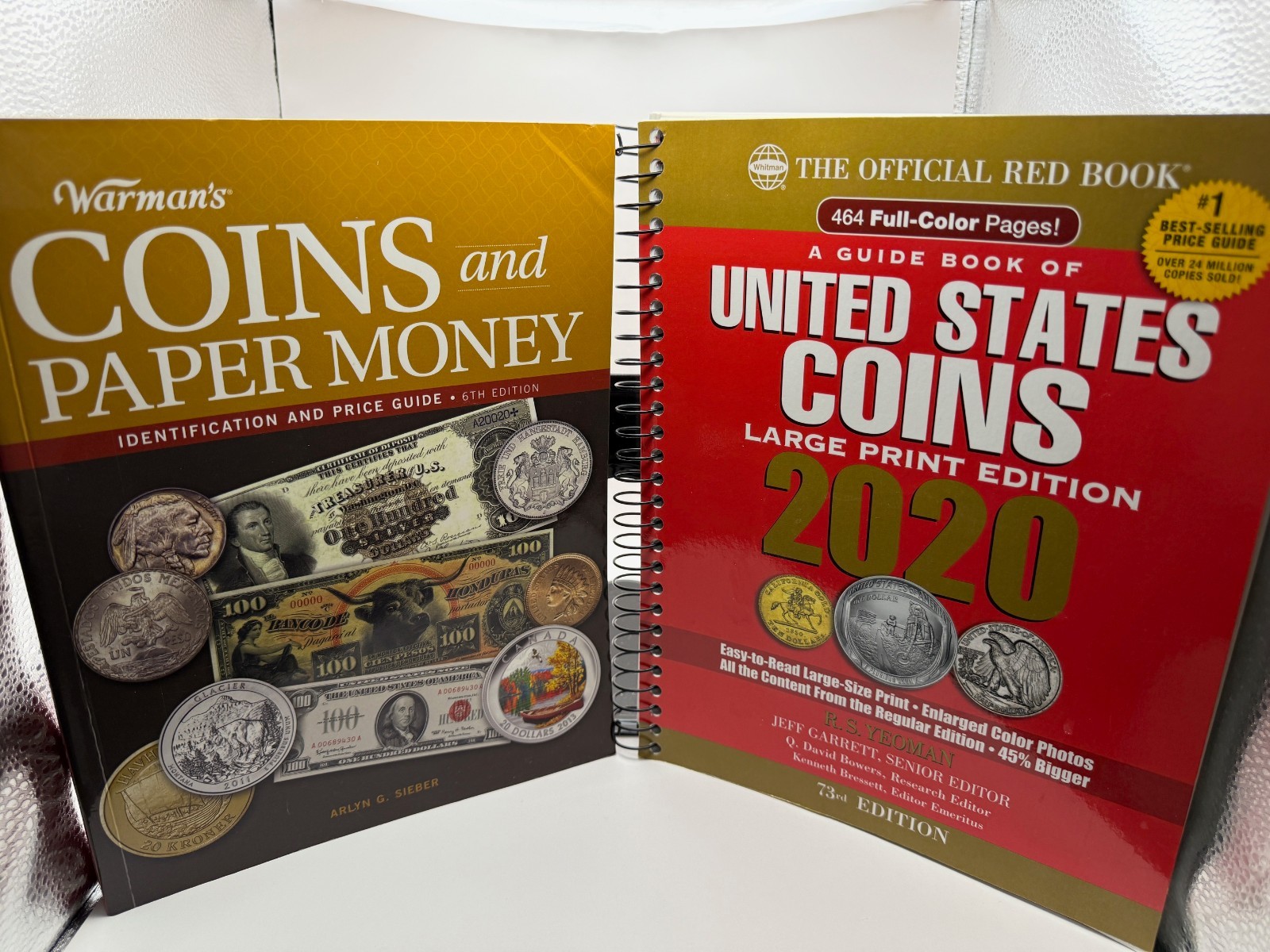

Photos from current listings. Actual item, color, and included accessories may vary.
Coin Book Buying Guide
Coin books are reference guides and catalogs for identifying, grading, and valuing coins and paper money, spanning U.S. and world series, ancients, and specialized subsets. The core trade-off is between large-format comprehensive catalogs with detailed pricing grids versus portable field guides with line drawings and no price data. Buyers should choose a guide whose edition year, geographic scope, and grading standards match the collection they actually own — an outdated or region-mismatched book is a compromise regardless of binding quality.
At a glance
- Category
- Books
- Last updated
- Nov 27, 2026
Current offers
Highlights
- Red Book (A Guide Book of US Coins) uses wholesale-plus-retail price grids and full-color photography; the 'Large Print' edition is identical in content but uses oversized type for low-vision readers.
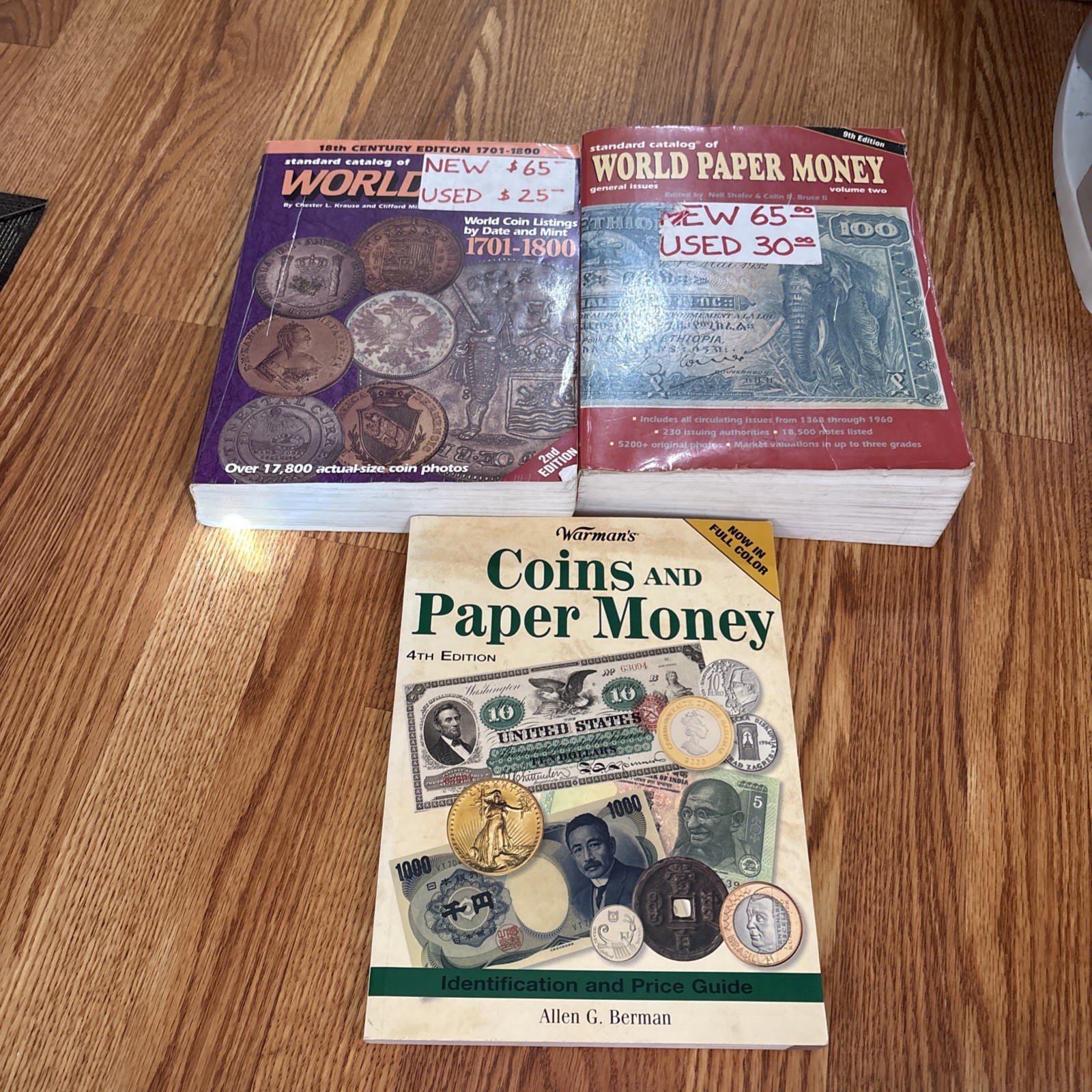
- Standard Catalog of World Coins is organized by century (1601-1700, 1701-1800, 1801-1900, 1901-2000, 2001-Date) — one volume does not cover all world coins.
- Krause 'Standard Catalog' volumes list mintages, metallic composition, weights, and up to three grade price columns; field guides like the Red Book are one-volume U.S.-only references.
- Paper-money guides (e.g., Standard Catalog of World Paper Money, 1368-Date) use Pick numbers and are split into General Issues and Specialized Issues — they do not overlap with coin catalogs.
Best use cases
- Best fit: buy a Standard Catalog of World Coins century volume matching your holdings (e.g., 1901-2000) — skip the 2001-Date volume if your coins predate 2001.
- Best fit: buy a dedicated paper-money catalog with Pick numbers if you hold banknotes — skip coin catalogs entirely, since they do not list note values.
- Wrong fit: a 2020-dated Red Book for current U.S. pricing — bullion and key-date values shift, so match the edition year to the year you are actively buying or selling.
Buying tips
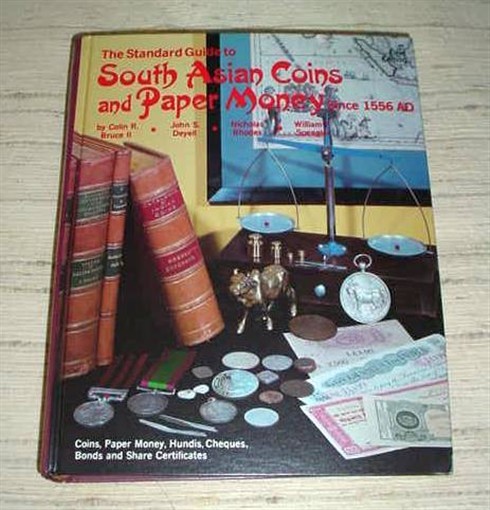
- Match the catalog's geographic scope to your collection: U.S.-only (Red Book), single-country (e.g., South Asian coins since 1556), or world multi-volume sets.
- Check the edition year against your purpose — current-year editions for buying/selling; older editions are fine for attribution, grading standards, and mintages.
- For world coins, confirm which century volume you need: 1601-1700, 1701-1800, 1801-1900, 1901-2000, or 2001-Date — they are sold separately.
- Prefer hardcover or library-bound catalogs for frequent bench use; paperback field guides are lighter but degrade faster with repeated page-flipping.
Specs
| Scope | U.S. / World / Paper money |
|---|---|
| Edition Year | Current-year vs older reference |
| Format | Hardcover / Paperback / Large Print |
| Pricing Data | Retail grids / Wholesale / None |
Related searches
What to check before buying
- Confirm your collection's scope (country, date range, coin vs paper) before selecting a volume — world catalogs are split by century and do not overlap.
- Verify the edition year printed on the cover matches the pricing era you need; older editions still list mintages and grading standards accurately.
- Check physical format: large-print editions are thicker and heavier, so confirm shelf or desk space if using the book as a permanent reference.
- For paper money, confirm the guide uses Pick numbers and covers your note series (General vs Specialized Issues) before buying.
FAQ
Data sources: eBay / Amazon listings and product attribute feeds. Updated Nov 27, 2026.
Some links on this page are affiliate links. If you buy after clicking one, we may earn a commission at no extra cost to you. This does not change which products appear here or their order. Affiliate disclosure.