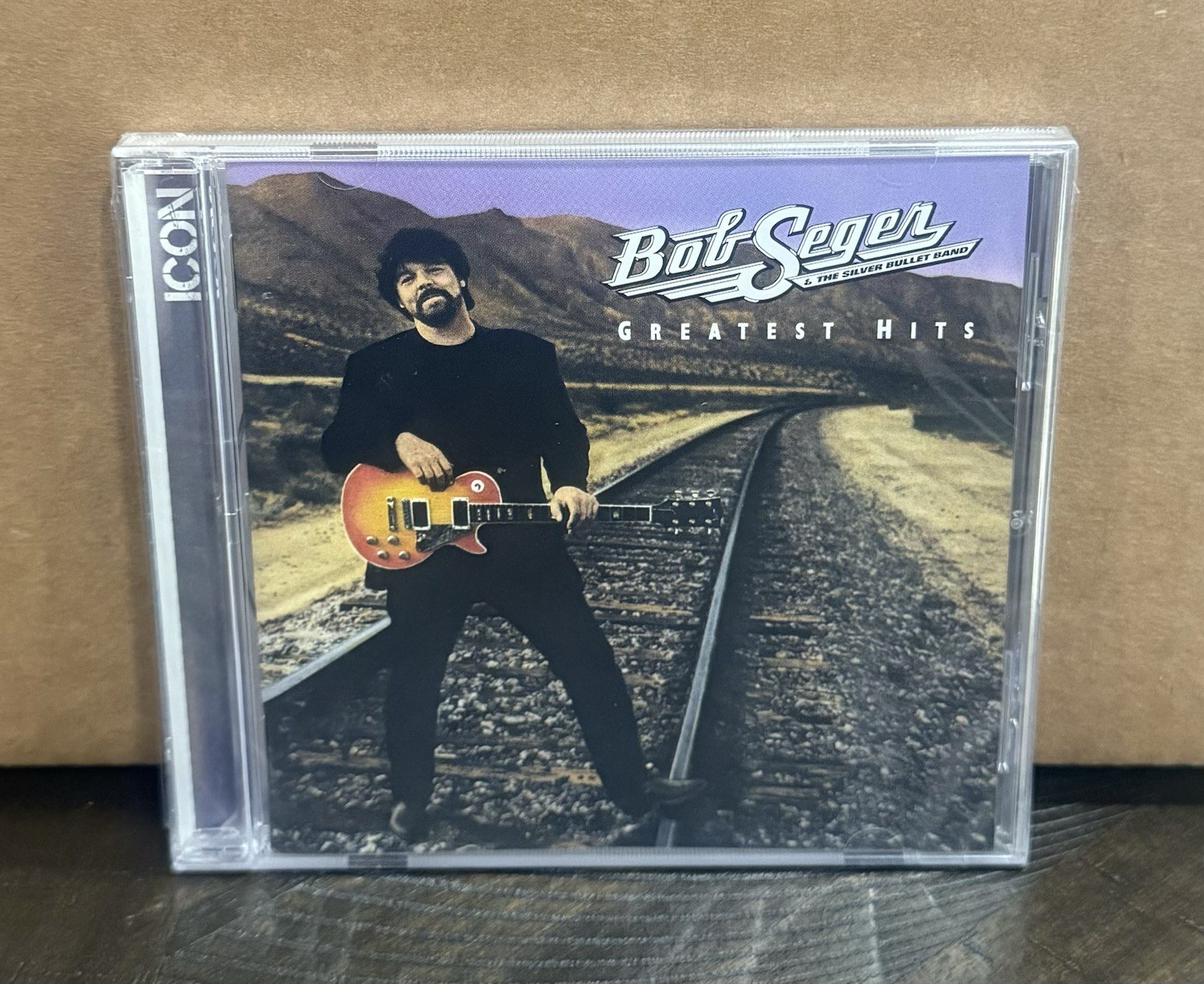

Photos from current listings. Actual item, color, and included accessories may vary.
Bob Seger CD Buying Guide
Bob Seger CDs are physical compact discs of the Detroit rocker's catalog, spanning original studio albums, live sets, and the two Greatest Hits compilations that dominate demand. The primary trade-off is between single-disc original albums for deep cuts versus the two-volume Greatest Hits for casual fans, with mastering generation and disc condition determining playback quality. The clear decision rule: buy the 1994 Greatest Hits for a one-disc primer, add Greatest Hits 2 for the later-era hits, and only chase original albums if you want specific deep tracks beyond the compilations.
At a glance
- Category
- Music CDs
- Last updated
- Nov 27, 2026
Current offers
Highlights
- Greatest Hits (1994) is a single CD with 14 tracks covering 1970s-80s Capitol era hits; Greatest Hits 2 (2003) adds 16 later and live tracks, so the pair is the complete singles primer.
- Original studio albums like Night Moves (1976) and Stranger in Town (1978) use early AAD/ADD mastering, while late-1990s reissues are often 24-bit remastered with higher dynamic range.
- Enhanced CD versions of Greatest Hits 2 include CD-ROM bonus content and require a computer CD-ROM drive, not just a standard CD player, to access the extra material.
- Standard Red Book audio CDs are 12 cm, 120 mm diameter and play on any CD, DVD, or Blu-ray player; SACD or DVD-Audio variants are not part of the standard Seger CD catalog.
Best use cases
- Pick Greatest Hits (1994) if you want one disc with 'Night Moves,' 'Turn the Page,' and 'Against the Wind' — skip it only if you already own those studio albums.
- Add Greatest Hits 2 (2003) if you want 'Roll Me Away,' 'Like a Rock,' and later-era tracks; skip the Enhanced version if you only play CDs in a car or standalone deck.
- Buy original studio albums like Beautiful Loser or Live Bullet only if you want deep cuts and live versions; skip them if you are a casual fan who only knows the radio hits.
Buying tips
- Match the disc format to your player: standard audio CDs play everywhere, but Enhanced CD bonus content needs a computer CD-ROM drive — check your player's logo before buying the Enhanced edition.
- Prefer late-1990s or 2000s remastered pressings over original 1980s pressings for cleaner dynamic range; original pressings are only worth it for collectors seeking specific matrix codes.
- Buy the two Greatest Hits volumes together rather than one at a time — Greatest Hits 2 assumes you own Volume 1 and skips the biggest 1970s hits entirely.
- Inspect used discs for label-side scratches and case cracks; CD audio tolerates light surface scuffs on the play side but deep radial scratches cause skips that no resurfacing fully fixes.
Specs
| Disc Format | Standard Red Book audio CD (12 cm) |
|---|---|
| Compilation Scope | Greatest Hits 1: 14 tracks / Hits 2: 16 tracks |
| Mastering Era | Original AAD/ADD vs 24-bit remaster |
| Enhanced Content | CD-ROM data track on Hits 2 Enhanced |
Related searches
What to check before buying
- Confirm your player reads standard Red Book audio CDs — all CD, DVD, and Blu-ray decks do; game consoles and some slot-load car decks may not read Enhanced CD data tracks.
- Check whether you need the Enhanced CD-ROM content; if you only use a standalone stereo or car player, the standard Greatest Hits 2 disc is the correct pick.
- For collectible original pressings, verify the matrix/runout code matches the pressing you want, since 1970s Capitol pressings vary by plant.
- Measure shelf or visor storage for standard 142 mm jewel cases if buying multiple albums; slim cardboard sleeves save space but offer less disc protection.
FAQ
Data sources: eBay / Amazon listings and product attribute feeds. Updated Nov 27, 2026.
Some links on this page are affiliate links. If you buy after clicking one, we may earn a commission at no extra cost to you. This does not change which products appear here or their order. Affiliate disclosure.