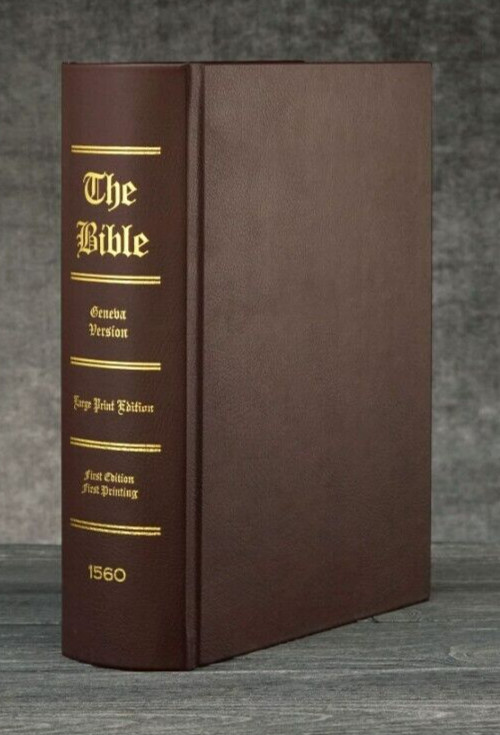
Shopping for antiquarian collectible books often means deciding between a rare original and a well-made reproduction that lets you experience history without the museum price. The 1560 Geneva Bible holds a special place in English scripture, and this facsimile edition offers a way to own that legacy. But is it the right addition to your library? Here is a focused look at what this listed edition offers.
Quick Verdict
For collectors and readers who want the look and content of the first English Bible with numbered verses, this 1560 Geneva Bible facsimile delivers a substantial piece of Reformation history at a accessible price of USD 99.99. It is a facsimile, not an original, so it suits those who value the text and historical significance over investment-grade rarity.
Who It Suits
This edition fits a few different collectors. It will appeal to anyone studying the history of English Bibles because the Geneva Bible was the first to divide scripture into numbered verses and was quoted by Shakespeare over 5,000 times. It also suits readers who want the famous marginal notes, which make up about 300,000 words, or one-third of the text, and reflect the Calvinistic and Protestant Reformation influences that shaped this translation. If you are building a collection focused on Bibles, Christianity, or Reformation-era theology, this facsimile gives you the substance of that landmark work.
What Stands Out from the Listed Details
Several features make this edition notable. It is marked as a 1st Edition facsimile, meaning it reproduces the 1560 original rather than a later revision. The place of publication is listed as the USA, and the publisher is The Bible Museum, with a 2024 printed year. The binding is described as Fiscagomma, a distinctive material that sets it apart from typical cloth or leather facsimiles. The language is English, and the country of origin is the United States.
The description also highlights that hand-created woodcuts produced the images within the Bible. That detail matters if you appreciate the visual artistry of early printed books. The marginal notes are a major part of the appeal, but they were also the reason the Bible fell out of favor: King James I considered the Geneva Bible seditious and made its ownership a felony. That historical tension is embedded in the book itself, making it a fascinating piece for collectors who enjoy the stories behind the texts.
Meaningful Trade-Offs
The main trade-off is clear: this is a facsimile, not a 1560 original. If your goal is a rare antique investment, this reproduction will not satisfy that. The listed attributes specify Original/Facsimile: Facsimile, so the expectation is set. Additionally, the Bible's own history is a trade-off of sorts - the same marginal notes that made it popular with readers also led to its suppression, so a collector focused solely on Church of England tradition might prefer a different edition.
Another consideration is the binding. Fiscagomma is a specific material, and while it is part of the listed specification, it may not match the look or feel of the historical leather bindings you might expect. The 2024 print year is recent, so this is not an aged artifact, but it does mean the facsimile should be a clean, readable copy.
The 1560 Geneva Bible - First Edition Facsimile
This product, the 1560 Geneva Bible - First Edition Facsimile, is listed at USD 99.99. Its attributes confirm it is an English-language facsimile printed in 2024, with the United States as both country of origin and place of publication. The described content - numbered verses, thousands of Shakespeare quotations, and extensive marginal notes - makes it a meaningful piece for historical study. The concrete limitation is the facsimile status itself and the Fiscagomma binding, which may not appeal to purists seeking period-accurate materials.
Bottom Line
If you want a readable, affordable reproduction of one of the most influential English Bibles ever printed, this facsimile is a solid choice. The price is reasonable, the historical significance is genuine, and the listed details give you confidence in what you are getting. Just go in knowing it is a 2024 reproduction, not a centuries-old original, and let that shape your expectations. For the right collector, it is a compelling addition.