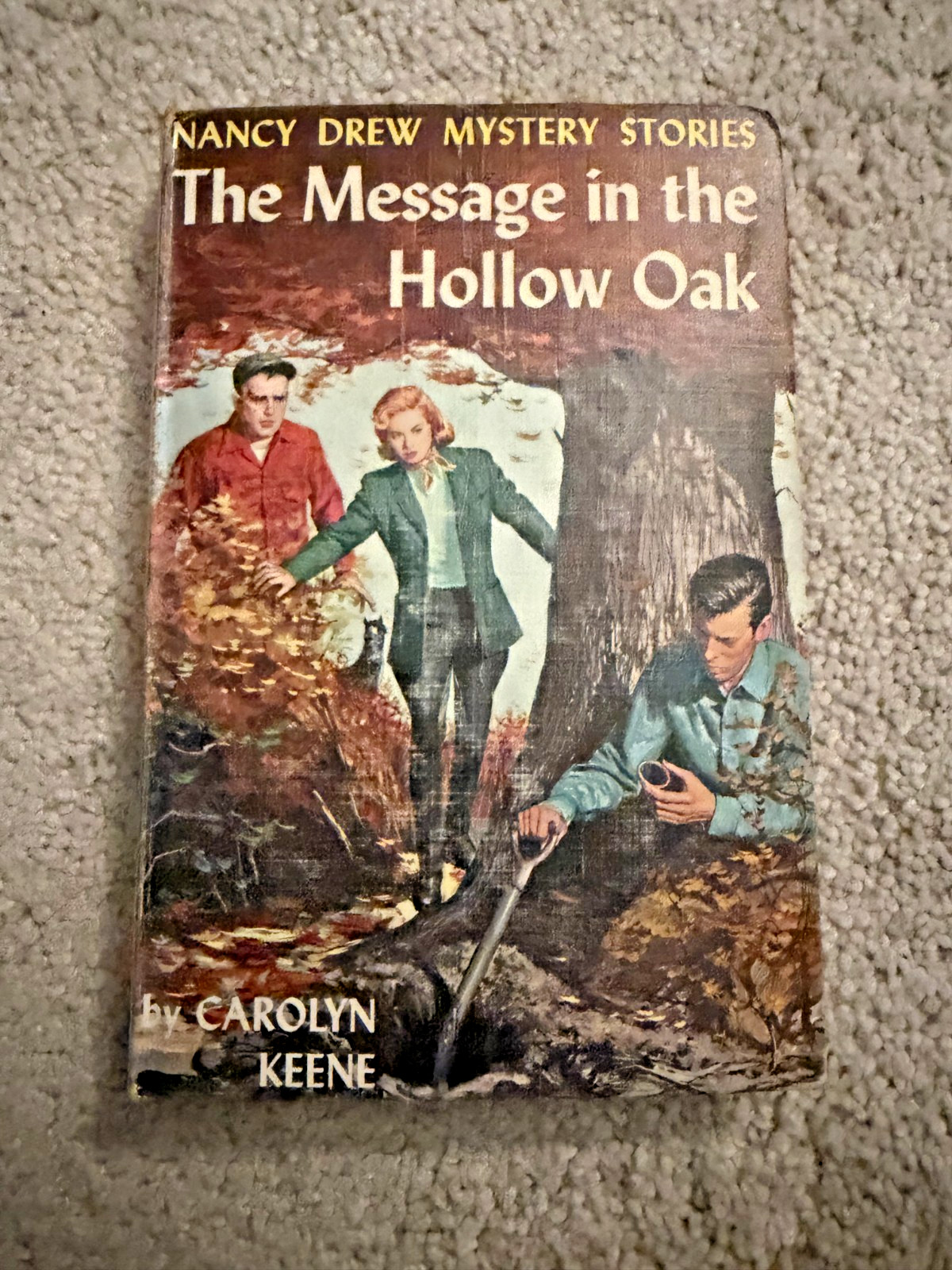

Photos from current listings. Actual item, color, and included accessories may vary.
Nancy Drew Vintage Book Buying Guide
Nancy Drew vintage books are collectible hardcovers from the original 1930-1979 series by Carolyn Keene, distinguished by printing era, cover art style, and dust jacket presence. The core trade-off is between early first-edition printings with fragile jackets and later revised-text editions with durable picture covers but lower scarcity. The decision rule: prioritize dust jacket, printing code, and cover art era over general condition grades, because a jacketless early printing is a reading copy while a jacketed later printing can be a true collectible.
At a glance
- Category
- Antiquarian & Collectible Books
- Last updated
- Nov 26, 2026
Current offers
Highlights
- Printing era is coded on the copyright page: 1930-1959 books list multiple titles up to the current volume; 1960+ revised texts list only that title plus prior ones, and later printings add ISBNs.
- Cover art defines tiers: 1930s-1940s blue/orange silhouette dust jackets, 1950s wraparound art, 1960s-1970s yellow-spine picture covers (Matte or Glossy), with jacket presence multiplying value.
- Format matters: 1930-1950s books are thick blue cloth with 25 chapters; 1960+ revised editions are thinner, 20 chapters, and often picture-cover library editions.
- Dust jackets dominate grading: a Very Good jacket can raise value 3-10x over a fine jacketless copy; jacket art must match the book's printing era to be original.
Best use cases
- Best for readers: choose 1960s-1970s glossy picture-cover editions—durable, affordable, complete text, and easy to shelve; skip fragile 1930s jackets for reading.
- Best for investment: target 1930-1949 first-printing blue cloth with original jacket in Very Good+ or better; skip 1970s reprints and ex-library copies with stamps.
- Best for display: pick 1950s wraparound-art jackets with bright colors and minimal chipping; skip matte 1970s covers that fade and scuff easily.
- Wrong fit: buying a 'lot' of mixed 1930s-1970s books expecting uniform value—era and jacket gaps make sets worth only the sum of the weakest copies.
Buying tips
- Match jacket to book: check that the front flap lists the same title and the back panel ad matches the printing era; mismatched jackets are common and halve value.
- Read the copyright page: '1930' alone means a first-text printing; '1930, 1959' indicates a revised text, which is a different collectible tier.
- Inspect spine: blue cloth 1930-1950s should show crisp gilt lettering; faded or rubbed spines drop a grade and signal heavy handling.
- Avoid ex-library: look for 'discard' stamps, pocket residue, and tape shadows on boards—these cap value regardless of jacket presence.
Specs
| Printing Era | 1930-1949 first text vs 1959+ revised |
|---|---|
| Cover Format | Blue cloth vs yellow-spine picture cover |
| Dust Jacket | Original era-matched vs none |
| Chapter Count | 25 (original) vs 20 (revised) |
Related searches
What to check before buying
- Verify the copyright page lists the correct title count and dates; a 1930 date with 1959 revision is not a first printing.
- Confirm jacket art era matches the book: 1930s silhouette art belongs on blue cloth, not on 1970s yellow-spine boards.
- Measure shelf space: 1930s-1950s cloth books are thicker (about 1.25-1.5 in) than 1960s-1970s picture covers (about 0.75-1 in).
- Check for musty odor and foxing on page edges; high humidity storage causes brown spots that are irreversible and lower grade.
FAQ
Data sources: eBay / Amazon listings and product attribute feeds. Updated Nov 26, 2026.
Some links on this page are affiliate links. If you buy after clicking one, we may earn a commission at no extra cost to you. This does not change which products appear here or their order. Affiliate disclosure.